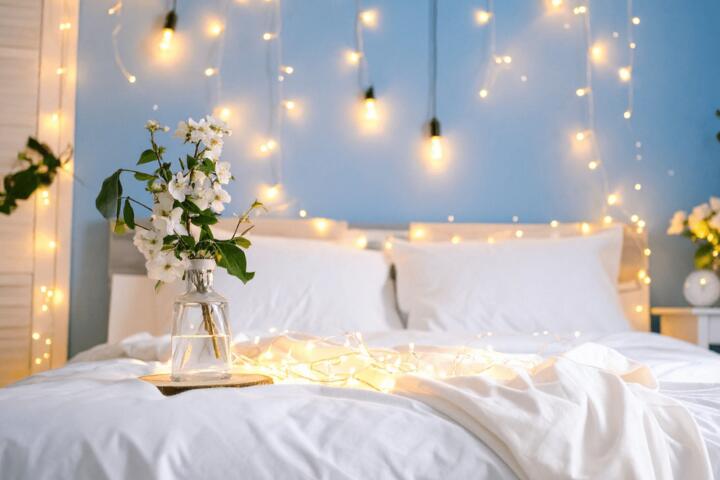
Lighting And Mood Basics
Room mood comes from how your eyes interpret light intensity, color, direction, and contrast. Brightness affects perceived openness; dim light can feel cozy but also reduces detail. Color temperature steers emotion through biology and learned associations: warmer light often reads as relaxing, while cooler light reads as alerting. Direction matters too: light from above can feel clinical, while side and wall lighting tends to feel softer because it reduces harsh shadows.
Practical examples show up fast. A kitchen with bright, cool overhead lighting can feel “awake” even when you want calm. A bedroom with warm lamps and dimmable fixtures often feels quieter because contrast drops and shadows become gentler. If you switch from a single ceiling bulb to layered lighting, the room usually stops feeling flat and starts feeling “finished.” I noticed this in a small apartment test (I used a 2700K LED lamp and a dimmer set to about 30%—the difference in perceived comfort was immediate).
Problems People Have
Many people treat lighting as a single choice: “bright enough” or “not bright enough.” That approach ignores glare, shadow direction, and how light spreads across walls. A room can be bright and still feel tense if the light source is harsh, high-contrast, or placed where it reflects into your eyes.
Another common mistake is mixing color temperatures without a plan. A 4000K bulb in one fixture and a 2700K bulb in another can create a patchwork look that feels restless, especially in open-plan rooms. People also underestimate surface reflectance: glossy paint, mirrors, and light-colored walls bounce light and soften the overall scene, while dark walls absorb light and demand more lumens to reach the same perceived brightness.
Supporting technologies drive the experience. Dimmable LEDs vary by driver design, and some dimming systems introduce flicker or visible changes in color as brightness drops. Many LED bulbs also have different beam angles; a narrow beam can create bright hotspots, while a wider beam spreads light more evenly. If you use smart bulbs, the app’s “scene” settings can change both brightness and color temperature, and the default scene names rarely match how the room actually looks.
Solutions And Practical Advice
Choose Color Temperature First
Start with color temperature because it sets the baseline mood. For living rooms and bedrooms, many people prefer warm white around 2700K–3000K; for work areas, neutral white around 3500K–4000K is common. If you want a calmer evening feel, pick bulbs that stay consistent across dimming levels, since some LEDs shift color when dimmed.
To test without buying everything at once, use a temporary setup: swap one bulb in the main fixture and one lamp in the room. Then compare at two brightness levels—roughly “low” (around 20–30% on a dimmer) and “medium” (around 50–60%). If the room looks greenish or the color changes noticeably when dimmed, the bulb may not match your expectations.
Use Layered Lighting, Not One Bulb
Layered lighting means you combine general light, task light, and accent light so the room has multiple comfortable brightness zones. General light sets the overall level; task light supports reading, cooking, or desk work; accent light adds depth by highlighting textures, art, or architectural features.
A practical target is to avoid relying on a single overhead source. For example, in a living room you can use a ceiling fixture for baseline illumination and add a floor lamp near seating for softer shadows. In a dining room, a pendant can anchor the scene, while wall washers or picture lights prevent the room from feeling top-heavy.
When planning, consider beam angle. A 40–60° beam often works for accent lighting; wider beams spread light more gently for ambient use. I once measured a “too bright” corner after switching to a narrow 25° spotlight; the hotspot looked dramatic but made the rest of the wall feel darker, which increased contrast and tension.
Control Glare And Shadow Direction
Glare comes from bright sources in your line of sight and from high contrast between light and dark areas. Diffusers, shades, and indirect lighting reduce glare by spreading the light. Shadow direction matters because it changes how faces and objects look; light from behind or from very high positions can create unflattering shadows.
To reduce glare, place lamps so the brightest part of the fixture sits below eye level when you are seated. Use warm dimming rather than “full blast” for evening comfort. If you have recessed downlights, check whether the trim is baffle-style; baffles reduce direct glare compared with open trims.
For visual comfort, aim for smooth dimming rather than abrupt on/off behavior. If your dimmer causes buzzing, flicker, or visible strobing, the combination may be incompatible. Many LED manufacturers publish dimmer compatibility lists; checking those lists can prevent a frustrating setup.
Plan With Real Measurements
Lighting decisions get easier when you measure. A basic light meter app can help you compare changes, though phone sensors vary and may not match professional lux readings. Still, relative comparisons work: measure the same spot before and after you change bulbs or add a lamp.
For room planning, use a simple workflow. First, identify the “mood zone” where you sit or relax. Second, set a baseline brightness for that zone using dimming. Third, add task lighting only where you need detail, then add accent lighting last so it does not overpower the scene.
If you want a starting point, many people find that bedrooms feel comfortable around 50–150 lux for general ambience, while reading often needs higher levels. These ranges vary with eyesight, room size, and surface reflectance, so treat them as starting points rather than rules.
Case Examples
Scenario 1: Living Room That Feels “Tense”
A renter had one bright ceiling fixture with a 4000K LED bulb. The room looked sharp but felt stressful at night, and faces during conversations looked harsh. The fix started with replacing the ceiling bulb with a 2700K dimmable LED and adding a floor lamp beside the sofa. The renter also adjusted the lamp so the brightest part stayed out of direct sight from the couch. After the change, the room still looked bright enough for daily life, but contrast dropped and the seating area felt calmer.
Scenario 2: Bedroom With Good Brightness, Poor Sleep Feel
A homeowner used multiple warm bulbs but kept them at high brightness in the evening. The bedroom looked cozy at first, yet it felt “wired” during wind-down. The adjustment focused on dimming range and timing: bulbs were set to a lower level for the last hour before sleep, and a bedside lamp replaced overhead light for reading. The homeowner also checked that the dimmer behaved smoothly; one bulb flickered at very low settings, so it was swapped for a bulb rated for dimming down to low levels. The room mood became calmer because brightness and contrast stayed lower when the body needed a slower signal.
Checklist And Tradeoffs
| Goal | What To Change | What You Should See | Tradeoff |
|---|---|---|---|
| More calm | Use 2700K–3000K and dim to lower levels | Lower contrast, softer shadows | Detail may drop for tasks |
| Less glare | Add shades/diffusers; reposition lamps | Fewer bright sources in eye line | May require more total lumens |
| Better depth | Add wall or accent lighting | Walls stop looking flat | Accent can feel busy if too bright |
| Reliable dimming | Match bulbs to dimmer compatibility | No buzzing or visible flicker | Not every bulb works with every dimmer |
Step-by-step mini plan:
- Pick one room and one “mood zone” where you relax.
- Set a baseline using the current fixture, then note where glare hits your eyes.
- Swap only one bulb type to a consistent color temperature and test at two dim levels.
- Add a second light source at seating height to soften shadows.
- Adjust accent lighting last so it supports the scene instead of dominating it.
Common Mistakes To Avoid
People often buy higher wattage or “brighter” bulbs to fix a mood problem. Brightness alone cannot fix glare if the light source sits in your line of sight. A room can feel harsh even with high lumens when the light is concentrated and shadows are extreme.
Another mistake is ignoring dimmer behavior. Some LED bulbs flicker at low settings or shift color as brightness changes, which can feel uncomfortable and can also make photos look inconsistent. If you notice eye strain during evening use, the bulb-dimmer pairing may be part of the issue.
Mixing fixtures without matching beam angles can also backfire. A narrow beam spotlight aimed at a wall can create a bright patch that makes the rest of the wall look darker, increasing contrast. Wider beams or diffused fixtures often produce a calmer gradient.
Finally, people sometimes forget that walls and ceilings act like part of the lighting system. Dark paint reduces reflected light, so the same bulb setup produces a different mood in a different room. Changing lighting without considering surface reflectance leads to repeated trial-and-error purchases.
FAQ
What Color Temperature Feels Calmer?
Warm white around 2700K–3000K often reads as relaxing because it reduces the blue-heavy portion of light. The room’s surfaces and dimming level still affect the final look.
Why Does My Room Look Harsh Even When It’s Bright?
Harshness usually comes from glare and high contrast, not just low brightness. A bright overhead source can create sharp shadows and direct light into your eyes.
Do Dimmable LEDs Flicker?
Some dimmable LED systems show flicker at certain dim levels, depending on the driver and dimmer compatibility. If you see flicker, buzzing, or color shifts at low brightness, the pairing likely needs adjustment.
How Many Light Sources Should A Room Have?
Most comfortable rooms use at least two sources: general light plus a softer secondary light for seating or tasks. Adding accent lighting helps depth, but it should stay lower than the main ambience.
Can Lighting Affect Sleep?
Light exposure in the evening can influence alertness and sleep timing, especially with higher brightness and cooler, blue-rich light. Lowering brightness and using warmer light during wind-down often helps people create a calmer routine.
Author's Insight
Lighting mood changes come from measurable factors: brightness level, color temperature, glare control, and the way light reflects off walls. Those factors interact with human perception, so the same bulb can feel different in rooms with different paint colors and ceiling heights. I do not have personal clinical experience, but the practical guidance aligns with common lighting design principles used in residential and workplace settings. If you want a reliable result, test changes in one room at two dim levels and watch for glare and flicker symptoms, since those issues often drive discomfort more than color temperature alone.
Key Takeaways
- Choose color temperature for the mood baseline, then tune brightness with dimming.
- Use layered lighting to reduce harsh shadows and make the room feel more even.
- Control glare by positioning diffused sources away from your eye line.
- Verify dimmer-bulb compatibility to avoid flicker or buzzing at low settings.
- Measure and compare in the same spot before and after changes to avoid guesswork.