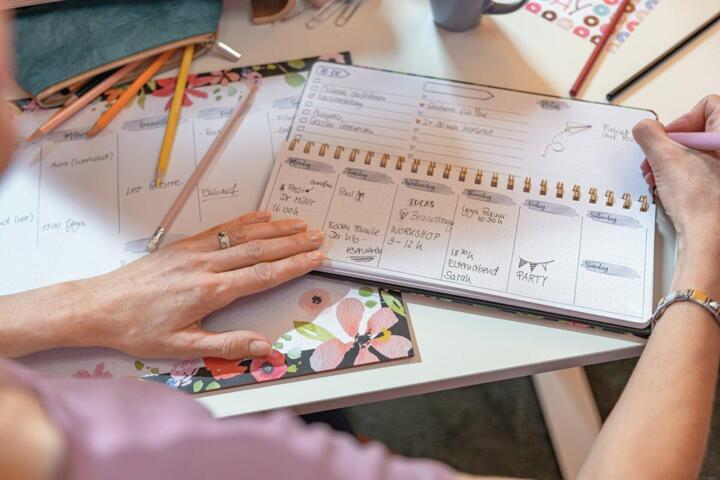
Week Planning That Holds
Week planning is the practice of turning intentions into a short, workable plan that survives real life: meetings run long, weather changes, and energy drops. A plan that fails usually fails for one reason: it assumes perfect conditions. For example, if you schedule 6 workouts in 7 days, you are implicitly betting that sleep, soreness, and travel will never interfere. The goal is not maximum output; the goal is fewer resets.
Use measurable anchors. The CDC recommends adults get at least 150 minutes of moderate-intensity aerobic activity per week, and muscle-strengthening activity on 2 or more days. That number is a planning target you can convert into 3 sessions of 50 minutes, or 5 sessions of 30 minutes. Another measurable anchor is sleep: the National Sleep Foundation guidance for adults commonly targets about 7–9 hours per night, and many people feel the difference when they miss that range by 1–2 hours. If your plan ignores sleep, your schedule will start demanding more willpower than your body can supply.
Why Weeks Collapse
People often get the week wrong in predictable ways. They plan every hour, then panic when one hour breaks. They also treat planning as a one-time event instead of a loop that updates after reality happens. Another common mistake is mixing priorities with tasks that have no clear next action, which creates stalled momentum.
Dependency errors drive most breakdowns. If you schedule a grocery run before you know what you will cook, you create a missing link. If you schedule a workout without checking whether you have time to shower and eat afterward, you create a friction point. If you plan “work on health” without naming the behavior, you end up negotiating with yourself all day.
Biology adds pressure. Hunger and low energy reduce patience, and stress increases the likelihood of skipping routines. If you rely on willpower to eat well, you will usually lose when your day runs late. If you rely on motivation to move, you will usually lose when soreness or fatigue shows up.
Simple Steps That Work
Pick Three Outcomes First
Choose 3 outcomes for the week that connect to health and daily function, not just productivity. Examples: “Cook 3 dinners at home,” “Walk 5 days,” “Be in bed by 11:00 on 4 nights.” This works because outcomes are measurable and reduce ambiguity. In practice, you can write them at the top of your weekly page and refer back to them when you add tasks.
Keep each outcome small. Small outcomes survive interruptions.
Use numbers to prevent drift. If you aim for “more movement,” you will likely do less than you think. If you aim for 5 walks of 20 minutes, you can adjust when the week gets messy. A 20-minute walk still counts toward aerobic activity for many people, and it is easier to fit than a 60-minute session.
Time-Block With Buffers
Block time for the outcomes, then add a buffer that matches your reality. A practical starting point is 20–30 minutes of buffer between major commitments, especially on weekdays. This works because it absorbs overruns without breaking your entire schedule. In practice, you might schedule a 30-minute lunch walk, then add a 15-minute buffer before your next meeting.
Skip tight schedules. They collapse fast.
If you use a digital calendar, color-code buffers so you can see them. If you use paper, draw a small “buffer band” after appointments. I prefer buffers after meetings because meeting overruns are common, and the cost of a buffer is lower than the cost of a missed routine.
Plan Meals Like Training
Meal planning works best when it treats food as a routine with a default. Pick 2–3 “default dinners” you can repeat, and plan ingredients once per week. This works because repeated meals reduce decision load and grocery errors. In practice, you can rotate: one protein + one vegetable + one carb, then swap the protein or sauce.
Use a 2-day prep rule. It reduces last-minute stress.
For example, cook a grain (like rice or quinoa) once, roast vegetables once, and portion a protein on the same day. If you do this for 2 days, you can assemble meals on the other days without starting from scratch. If you have dietary restrictions, verify ingredient fit with your needs and any clinician advice.
Protect Sleep With a Shutdown
Set a shutdown time and a short wind-down routine. A shutdown time is the point when you stop adding new tasks and start preparing for sleep. This works because it creates a predictable boundary that supports consistent bedtime. In practice, you can set “shutdown at 10:45” and do 2 steps: dim lights and prepare tomorrow’s top 1 task.
Skip late-night planning. It steals sleep.
Sleep timing matters for next-day function, and many adults feel worse when bedtime shifts by more than about 1 hour. If your schedule forces a later bedtime, plan a shorter morning task list so you do not compensate with more evening work. This is not about perfection; it is about reducing the swing.
Use a Weekly Review Loop
Do a 15-minute review twice: once midweek and once at the end. The midweek review updates the plan after reality, and the end review captures what worked so you do not repeat the same failure. This works because it prevents the “I’ll fix it next week” trap. In practice, you can ask: “What did I complete?” “What slipped?” “What is the smallest adjustment that keeps the outcomes alive?”
Skip waiting for Sunday. Midweek fixes stick.
Write adjustments in the same place as the plan so you do not create two competing versions. If you use a task app, mark tasks as “moved” rather than “failed,” which changes how you interpret setbacks. That interpretation matters when you are tired.
Case Examples
Busy Parent With Late Meetings
An anonymized scenario: a parent works 9–5 with 2 days of meetings that often run 30 minutes long. They set 3 outcomes: 5 walks of 20 minutes, cook 3 dinners at home, and bedtime by 11:00 on 4 nights. They time-block walks right after work, then add a 20-minute buffer before dinner prep. They use a shutdown time at 10:45 and prepare a “tomorrow top 1” note before bed. Midweek review shows dinner prep slipped on meeting days, so they switch to a default dinner that needs 10 minutes of assembly.
The week holds because the plan absorbs overruns and reduces decision load. The parent still misses one walk, but the outcomes remain reachable.
Student With Irregular Sleep
An anonymized scenario: a student studies late, sleeps 5–6 hours on weekdays, and then tries to catch up on weekends. They set 3 outcomes: 4 nights in bed by 12:00, 3 study blocks of 60 minutes, and 2 strength sessions. They time-block study blocks in the morning and early afternoon, then keep evenings for lighter tasks. They plan meals with a default breakfast and a default lunch to reduce morning decisions. End-of-week review shows the main failure was bedtime drift after social plans, so they add a rule: if a social event runs late, they shorten the next day’s study block instead of staying up later.
Checklist And Tradeoffs
| Choice | What You Gain | What You Risk | How To Decide |
|---|---|---|---|
| 3 outcomes only | Less ambiguity during tired hours | You may ignore minor tasks | If you often add too much, choose this |
| 20–30 min buffers | Fewer schedule collapses | Less room for extra tasks | If meetings run late, choose this |
| Default meals | Lower decision load | Monotony can reduce adherence | If you skip meals, choose this |
| One health metric | Less tracking friction | You may miss other issues | If tracking overwhelms you, choose this |
Step-by-step checklist for the week plan:
- Write 3 outcomes with numbers.
- Block time for each outcome plus 20–30 minutes buffer.
- Choose 2–3 default dinners and list ingredients once.
- Set a shutdown time and a 2-step wind-down routine.
- Schedule a 15-minute midweek review and an end review.
- Limit new tasks to those that support outcomes or fit buffers.
- Pick one health metric and track it weekly.
Common Mistakes That Backfire
Overstuffed calendars are the most common failure mode. When every block is full, you lose the ability to absorb overruns, and you start breaking routines. Another mistake is planning workouts without planning recovery time, which can lead to skipped sessions and then guilt. If you schedule strength training on consecutive days without considering soreness, you may feel too tired to follow through.
People also confuse tracking with progress. Logging every day can create a sense of failure when you miss one entry, which then triggers more avoidance. A better approach is weekly review and adjustment, not daily judgment.
Skip vague goals. They expand into chaos.
Meal planning mistakes also show up. Buying ingredients without a cooking plan leads to waste and last-minute takeout. Planning meals but not planning time for cooking leads to “I’ll do it later” behavior that never arrives. If you have dietary needs, verify ingredient choices with your constraints and any clinician advice.
FAQ
How Many Weekly Outcomes Should I Set?
Set 3 outcomes for the week. This number reduces ambiguity and keeps your plan from turning into a list of wishes. If you routinely miss goals, start with 2 outcomes for 1 week, then add a third after you stabilize.
What If My Schedule Changes Midweek?
Do a 15-minute midweek review and adjust the plan immediately. Move tasks into buffers or shrink them rather than deleting outcomes. If a commitment repeatedly breaks your plan, replace it with a smaller version that still supports the outcome.
How Do I Plan Exercise Without Overcommitting?
Use measurable targets like workout days and start with a realistic minimum. For example, aim for 2 strength sessions and 3–5 aerobic sessions, then adjust based on soreness and sleep. If you miss a session, reschedule within the same week instead of waiting for next week.
Do Default Meals Hurt Long-Term Eating Habits?
Default meals can help because they reduce decision load, but variety still matters for adherence. Rotate proteins and vegetables while keeping the assembly steps similar. If you feel bored and start skipping meals, adjust the defaults rather than abandoning the routine.
When Should I Seek Medical Advice?
Seek medical advice if sleep problems, fatigue, or appetite changes are persistent, worsening, or linked to symptoms like shortness of breath, chest pain, fainting, or unintentional weight loss. If you have a chronic condition, align exercise and meal planning with your clinician’s guidance.
Author's Insight
Planning systems fail when they ignore constraints like sleep timing, meeting overruns, and energy dips. The most reliable approach I see in practice is small, measurable outcomes plus buffers, then a midweek review that updates the plan while motivation still exists. A plan should reduce decisions, not add them. If you want a starting point, use 3 outcomes, 20–30 minute buffers, and one weekly health metric, then adjust after 7 days.
Key Takeaways
Start with 3 measurable outcomes, block time with 20–30 minute buffers, and protect sleep with a shutdown routine. You will likely see fewer midweek resets because the plan absorbs overruns and reduces decision load. The limit is that any plan can fail when life changes faster than your review loop; that is why the midweek update matters. If sleep, fatigue, or appetite issues persist or worsen, talk with a qualified clinician rather than treating planning as the only lever.